Automatically rotate incoming team bookings to the next available host in Cal ID using priority, weights, and fixed hosts for fair distribution.
Round-robin scheduling creates a team event type with a pool of hosts and automatically assigns each new booking to the next available host in rotation. Cal ID checks everyone’s calendar, skips busy hosts, and balances workloads across the team.
How assignment rotates: Cal ID first computes the union of available slots across all hosts, then assigns the booking to the highest-priority (or highest-weighted) host who is free in that slot, skipping anyone unavailable. When hosts tie, the least recently booked host wins.
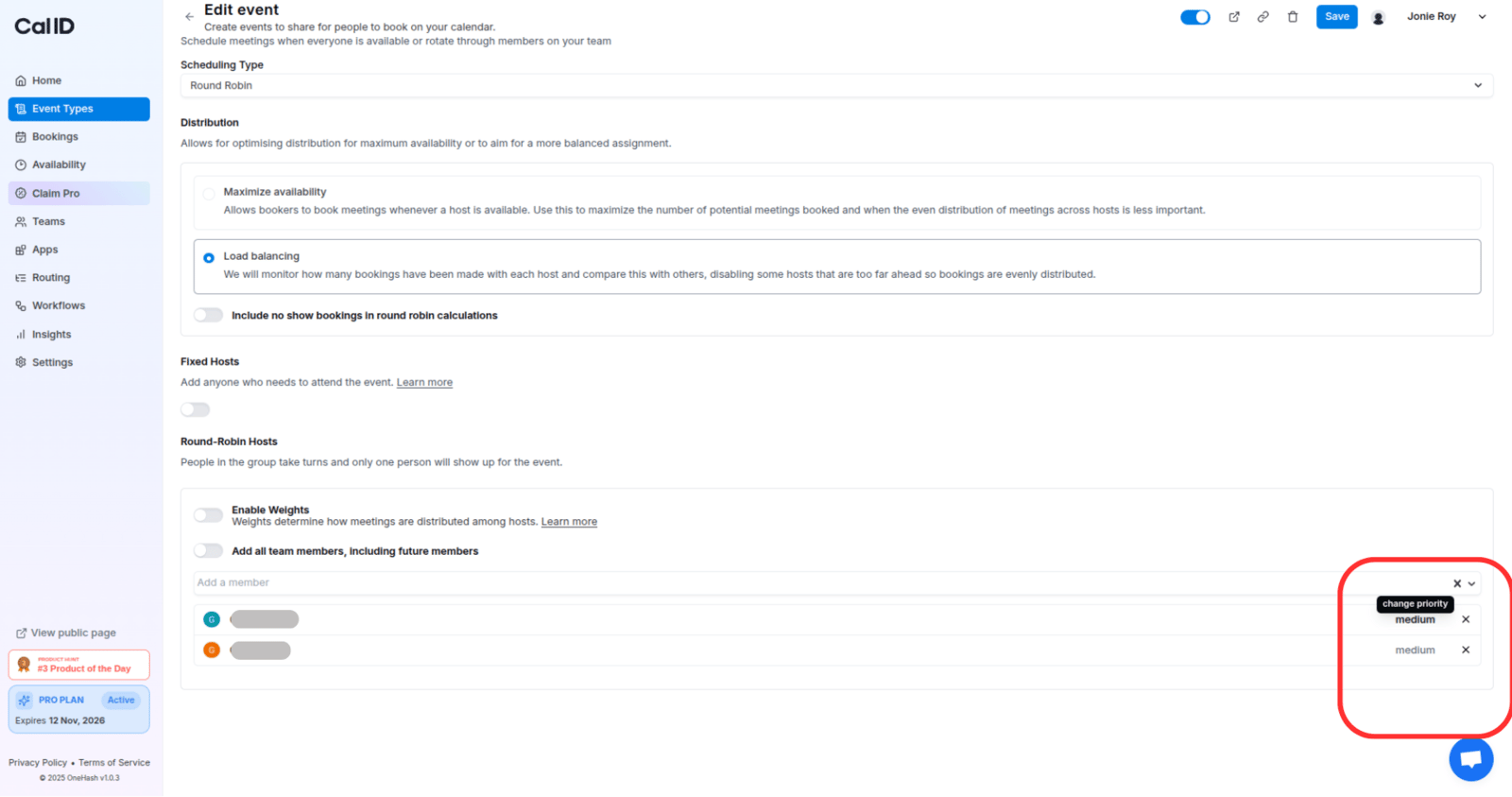
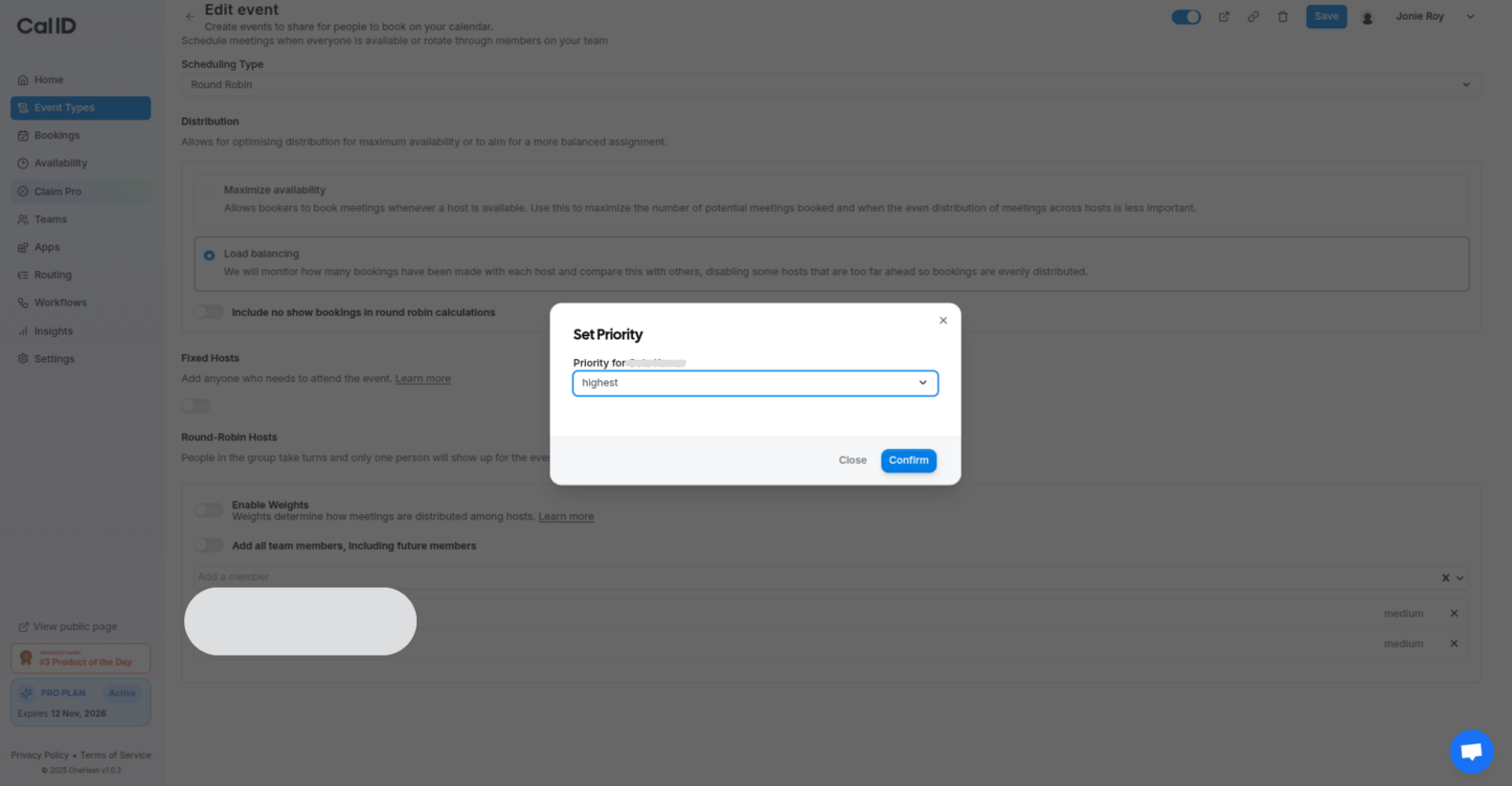
Every round-robin host has a priority (default: medium). Higher priorities get selected first when multiple hosts are available in a slot. Ties go to the least recently booked host. This ensures hosts with higher designated priorities are given precedence, optimizing resource allocation and streamlining event organization.For instance, if John and Jane are both available in the same slot, but John has a priority of High compared to Jane’s Medium, John will be booked. If several hosts share the same priority, Cal ID chooses the least recently booked host.You can select a priority for each host, and based on their priority (and availability in the selected slot), the hosts will be booked.
Weights are optional and must be enabled to use. They let you determine how meetings are distributed among hosts. When enabled, every host has a default weight of 100%, meaning each host should end up with the same number of bookings by default. However, hosts with fewer availabilities can still end up with fewer bookings. Only confirmed bookings count towards past bookings.For instance, Jane Doe has a weight of 100% and already has 8 bookings, while John Doe has a weight of 200% and already has 12 bookings. Assuming both are available, the next bookings would go to John Doe until a total of 16 bookings is reached.Weight adjustment: If new hosts are added to a round-robin event type that has weights enabled, their weights will be adjusted accordingly. New hosts have their bookings adjusted proportionally to their weight, accounting for the bookings existing hosts already have. This ensures a fair distribution when new hosts are added.Example:
Host
Weight
Bookings
Existing host 1
100%
5
Existing host 2
200%
9
New host
50%
—
Weight Adjustment = (Bookings of existing hosts / Sum of weights of existing hosts) * New host weightWeight Adjustment = 14 / 300 * 50 = 2.33The new host will have a weight adjustment of 2 bookings.
Least recently booked is the fallback method: the available round-robin host who was booked least recently is chosen. If more than one host meets this criterion, one is chosen at random.
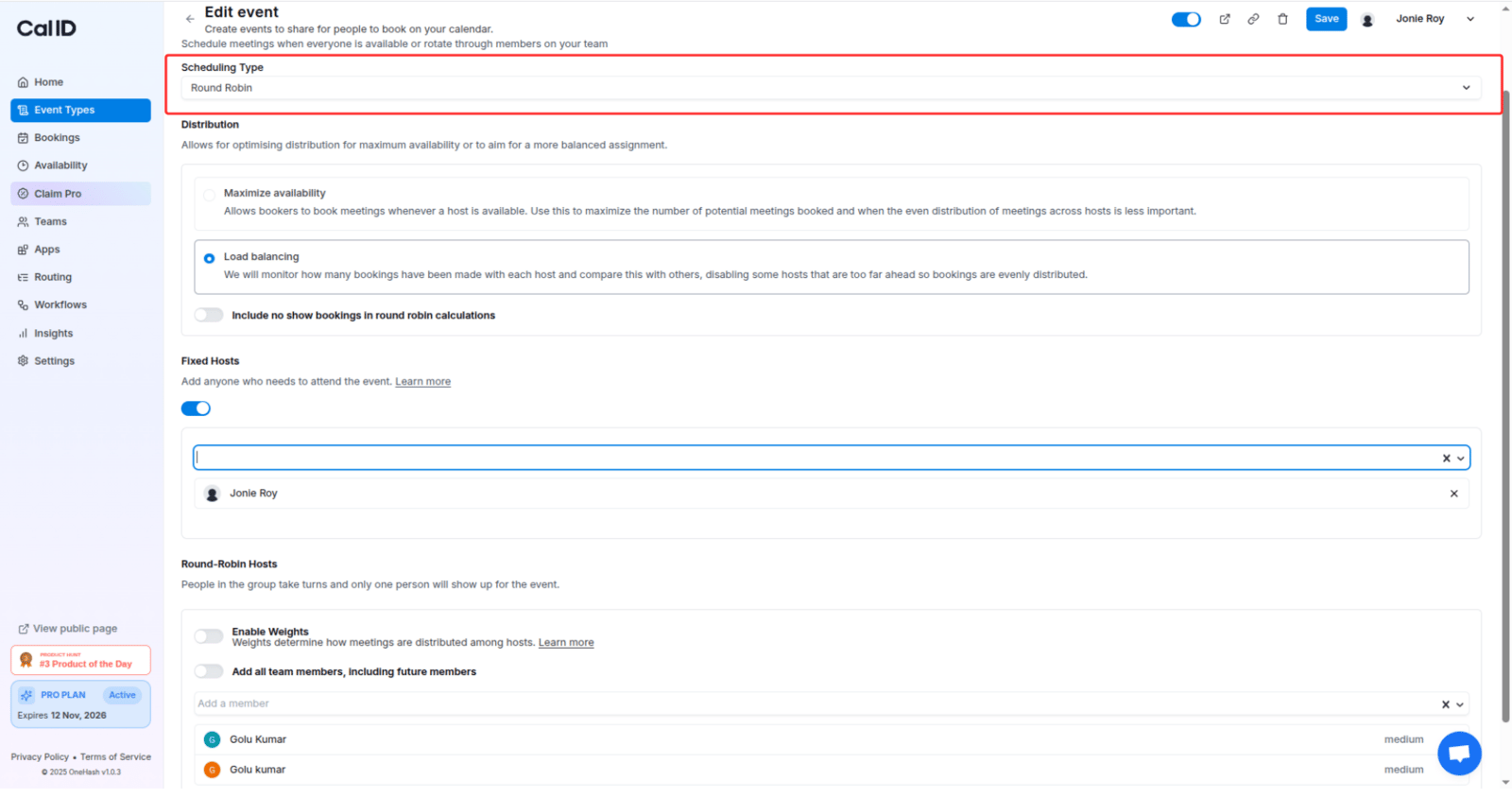
If you want to bring Collective behavior into round-robin events, Cal ID makes it possible. You can select which hosts should always attend the meeting, while the other selected team members are booked on a round-robin basis.
Fixed hosts are individuals who are consistently present at every meeting.
Round-robin hosts are members of a group who take turns attending meetings. Rather than everyone attending every meeting, only one person from the group attends each time.
Keeping one person on every call
For tasks like scheduling sales calls or product demos, where you have a pool of people among whom you’d like to distribute meetings, round-robin is the perfect choice.